

Creating a fictional world is one of the most thrilling parts of writing a novel. It allows a writer to construct places, societies, secret histories, and hidden ecosystems that never existed — but still need to feel real enough for readers to believe in them.
For Call of the Minotaur: Midas Files Book Two, one of the most important fictional settings is the Caves of Baghdad.
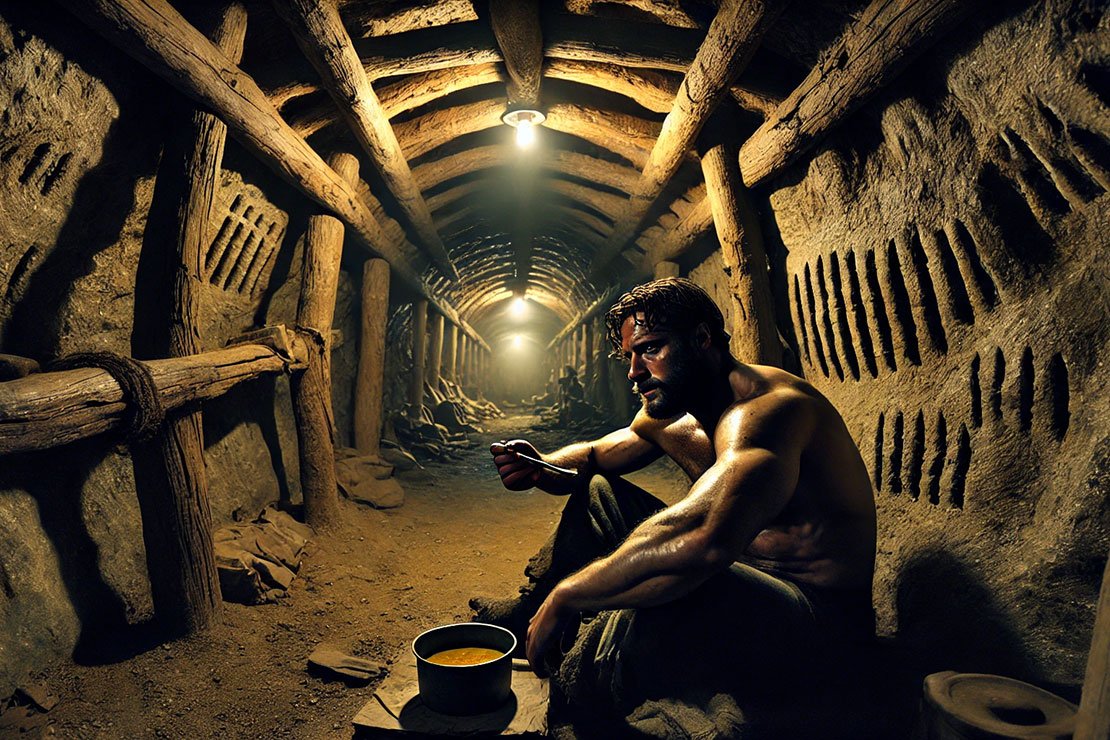
This underground world serves as the backdrop for Hank Raglan’s reintroduction in the series. After disappearing at the end of The Midas Protocol, Hank is found ten years later as a prisoner in a slave labor gang beneath Baghdad. He is trapped in a vast network of tunnels connecting Saddam Hussein’s palaces, bunkers, and hidden assets.
To survive, Hank must rely on the one thing he still has: his engineering mind.
The Caves of Baghdad were inspired in part by The Count of Monte Cristo and the Château d’If, but they also draw from the larger mythic idea of the labyrinth. That connection is central to the title Call of the Minotaur. Like the legendary creature hidden in the maze, Hank is trapped in a dark world of captivity, violence, power struggles, and despair.
But the labyrinth is not only physical. It is psychological.
Hank is not merely trying to escape tunnels. He is trying to survive what captivity has done to him. The Caves of Baghdad become a place of imprisonment, transformation, and confrontation — a world where Hank must face both external enemies and the darker parts of himself.
Making the Underground World Feel Real
The first challenge in creating the Caves of Baghdad was making them believable.
I wanted readers to feel the weight of the earth above Hank’s head. I wanted them to sense the damp walls, stale air, narrow passages, hidden chambers, and constant danger of collapse. Underground spaces are naturally claustrophobic, and that makes them powerful settings for suspense.
Darkness matters. Sound matters. Smell matters.
The drip of water in the distance. The scrape of stone underfoot. The musty odor of damp earth. The oppressive stillness of a tunnel where something may be waiting just beyond the torchlight.
Those sensory details are what make the setting feel alive.
Real-World Inspiration
Fictional places often begin with real ones.
For the Caves of Baghdad, I drew inspiration from several sources. The Château d’If, made famous by The Count of Monte Cristo, offered a model of isolation and imprisonment. The Cu Chi tunnels in Vietnam and the catacombs of Paris provided examples of real underground networks where people moved, hid, survived, and endured.
Those kinds of places help ground the imagination. They show how underground spaces can function, how they are supported, how they are ventilated, and how easily they can become both shelter and trap.
The goal was not to copy any one location, but to understand enough about real tunnels, bunkers, and subterranean systems to make the Caves of Baghdad feel plausible inside the world of The Midas Files.
Cinematic Influence
Movies also played a role in shaping the atmosphere.
The Shawshank Redemption is an obvious influence when thinking about captivity, patience, endurance, and escape. Andy Dufresne’s quiet determination in an oppressive prison environment echoes some of what Hank must draw upon in his own ordeal.
Indiana Jones and the Temple of Doom offers a different kind of inspiration: underground danger, hidden chambers, strange rituals, traps, darkness, and pulpy adventure. That sense of mystery and peril helped shape the more adventurous side of the Caves of Baghdad.
The setting needed to feel grim and dangerous, but also thrilling. It had to be a prison, a maze, a workplace, a battlefield, and a mythic underworld all at once.
Engineering as Survival
Hank Raglan’s engineering skills are crucial to his survival.
He is not the strongest prisoner. He is not the most ruthless. But he understands structure, pressure, weight, systems, and failure points. In the Caves of Baghdad, that knowledge becomes a survival tool.
A tunnel is not just a tunnel to Hank. It is a problem to be read. Where is the load going? Where is the air coming from? Which walls are stable? Which supports are failing? Where might water collect? Where might a hidden passage be possible?
That engineering mindset gives Hank value to the people holding him prisoner, but it also gives him a way to remain himself. His mind becomes the one part of him they cannot fully take.
The Caves as a Living Maze
Designing the Caves of Baghdad meant thinking about them as a network.
The tunnels needed to connect important locations: palaces, bunkers, storage areas, hidden rooms, and routes meant to protect powerful men from the consequences of war. Some passages would be wide enough for equipment. Others would be narrow, unfinished, unstable, or forgotten.
A convincing underground system needs practical features. Ventilation shafts, drainage channels, support beams, work areas, hidden doors, and dead ends all help make the space feel functional. At the same time, those same features create opportunities for danger.
A blocked passage can trap a man. A weak support can kill him. A ventilation shaft can offer hope. A chamber no one remembers can become a secret.
That is where the Caves become more than scenery. They become part of the plot.
History Beneath the Fiction
Because the Caves of Baghdad exist beneath Saddam Hussein’s Iraq, the setting also carries historical weight.
The tunnels are fictional, but they are built around real fears: dictatorship, secrecy, war, hidden infrastructure, and the brutal machinery of power. Saddam’s palaces and bunkers already suggest a world of paranoia and control. Extending that world underground allowed me to explore how physical spaces can reflect political realities.
The Caves are not merely a secret construction project. They represent a regime trying to bury its power beneath the earth.
For Hank, that means his captivity is not only personal. He is trapped inside the architecture of tyranny.
The Labyrinth and the Minotaur
The title Call of the Minotaur is not accidental.
The Minotaur myth gives the Caves of Baghdad a deeper symbolic layer. In the old story, the creature waits inside the labyrinth, hidden from the world and fed by human suffering. In Hank’s story, the labyrinth is both the underground tunnel system and the emotional maze he must navigate after ten years of captivity.
Hank is Theseus in one sense, searching for a path through the darkness. But he is also something closer to the Minotaur himself: a man hidden away, changed by imprisonment, feared by those who do not understand what he has become.
That tension is important to the book.
Is Hank trying to escape the monster, or is he afraid he has become one?
The Emotional Weight of the Setting
The Caves of Baghdad are designed to affect Hank physically and emotionally.
The darkness wears on him. The labor exhausts him. The danger keeps him alert. The uncertainty eats away at his sense of time and self. Every tunnel presents a practical challenge, but also a psychological one.
Hope becomes dangerous because hope can be crushed. Despair becomes dangerous because despair can make survival feel pointless.
Hank’s journey through the Caves is about endurance. It is about ingenuity. It is about whether a man can hold onto enough of himself to keep moving when the world above has forgotten him.
Suspense, Danger, and Discovery
Underground settings naturally create suspense.
There are limited exits. Sound travels strangely. Light is scarce. The reader never knows what might be waiting beyond a bend in the tunnel. That makes the Caves ideal for danger, but also for discovery.
A collapse can change the entire map. A hidden room can reveal a secret. A hostile prisoner can become an ally. A passage meant for escape can become a trap.
The Caves allow for action, mystery, survival, and dread. They also let the story slow down when needed, giving Hank moments to think, remember, plan, and confront what has happened to him.
Why the Caves Matter
The Caves of Baghdad are not just a setting in Call of the Minotaur. They are part of Hank Raglan’s transformation.
They test his intelligence, his patience, his morality, and his will to survive. They connect the book’s adventure plot to its deeper themes of captivity, identity, myth, and rebirth. They also turn the title’s Minotaur image into something more than a reference.
The Caves are the labyrinth.
Hank is the prisoner inside it.
And somewhere in the darkness, something is calling.
About the Author
 Matt De Reno
Matt De Reno is the author of The Midas Files, a Pittsburgh-rooted science-fiction thriller series exploring ancient power, impossible technology, hidden history, and the people caught in between. In Bingham’s Notebook, he opens the files behind the fiction—examining characters, artifacts, locations, chapter connections, and the evolving mythology of the series. Email him at