
I believe it was James Scott Bell who described a book’s theme as something that often reveals itself after the story has been told.
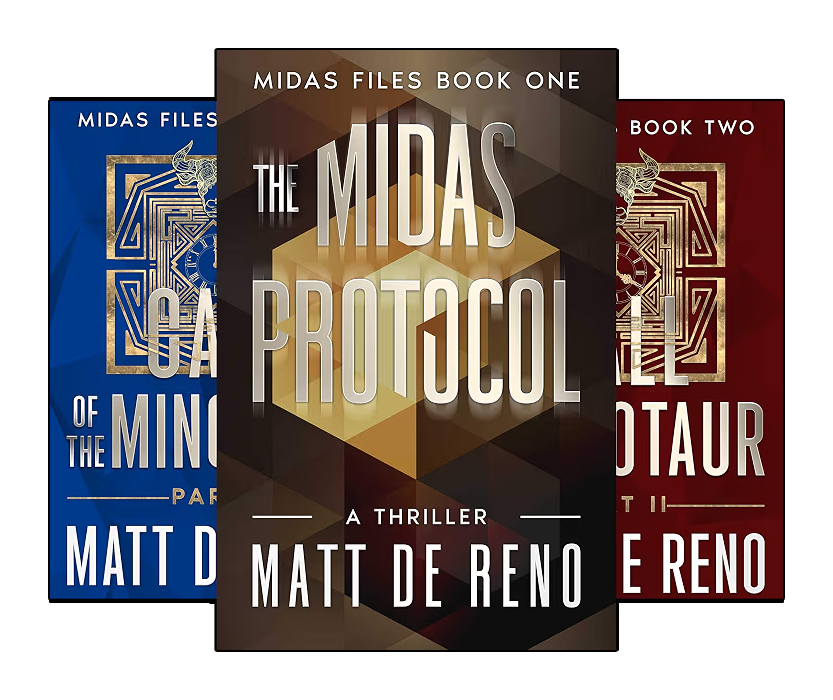
That idea has stayed with me, because as I worked through Call of the Minotaur: Midas Files Book Two, I began to notice a theme emerging that I had not fully planned at the beginning: the significance of September 11, 2001, and the way that day reshaped the modern world.
It became especially interesting to me because Call of the Minotaur follows characters who are moving out of the 1990s and into the 2000s — a decade I sometimes think of as the “Dread Aughts.” For many of us, that transition did not feel like a normal turn of the calendar. It felt like the world had cracked open and become something darker, stranger, and more uncertain.
That shift matters deeply to the book.
The World Before and After
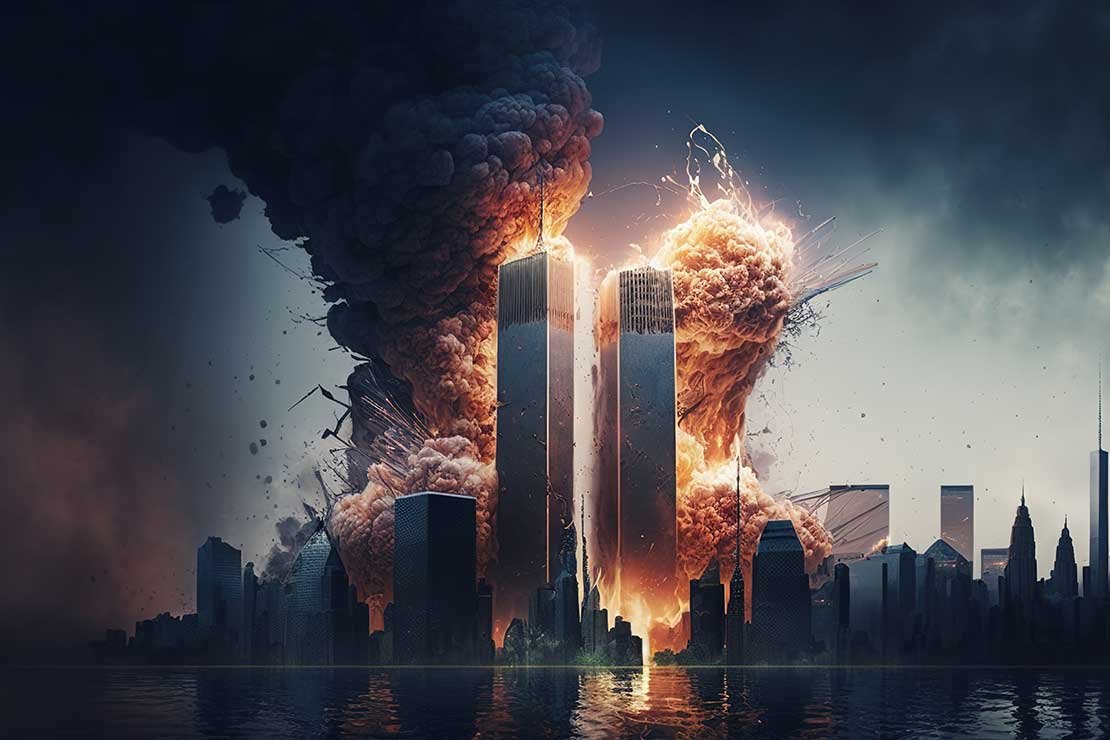
The events of September 11, 2001, were a turning point not only for America, but for much of the world. The attacks shattered a sense of safety and changed the way people thought about security, terrorism, war, surveillance, politics, and the future.
For those who lived through that day, the memory remains vivid. It is one of those historical moments where people remember where they were, what they saw, and how the world felt in the hours and days that followed.
In Call of the Minotaur, 9/11 is not simply background history. It becomes part of the emotional and geopolitical landscape the characters must inhabit. The story is still a thriller, but it takes place in a world that has been altered by fear, suspicion, grief, and the urgent desire to understand what comes next.
That makes the setting more than a date on a timeline. It becomes part of the pressure surrounding the characters.
Hank Raglan’s Awakening
In The Midas Protocol, Hank Raglan disappears at the end of the story, falling into a mystery that bridges the 1990s and the next century. In Call of the Minotaur, his return is tied to a very different world than the one he left behind.
Hank’s long absence becomes a narrative bridge between the Iraq invasion of Kuwait in 1990 and the post-9/11 era. While he is lost to the world, history keeps moving. Tensions rise. Technology changes. Politics shift. America changes.
When Hank finally awakens, he does not simply return to life. He returns to a world that has moved on without him.
That is part of the emotional weight of the story. Hank must navigate not only the immediate danger around him, but the disorientation of waking into a new era. The 1990s are gone. The world he knew has been replaced by one shaped by trauma, uncertainty, and a new kind of war.
His awakening mirrors something larger: America’s own awakening to a more dangerous and complicated century.
Caroline Friday and the Trauma of Witnessing
Caroline Friday, one of the central heroes of The Midas Files, is also directly shaped by 9/11.
Her experience in New York City on that day changes her. It adds grief, urgency, and emotional scar tissue to a character already driven by questions, truth, and unfinished business. For Caroline, 9/11 is not an abstract historical event. It is something she witnesses. Something she survives. Something that becomes part of who she is.
That matters because Caroline is not only an investigator. She is someone who carries memory. Her role in the series is tied to the search for truth, but after 9/11, truth carries a different weight. The stakes feel larger. The world feels less stable. The hidden forces moving beneath history feel even more dangerous.
Through Caroline, the book can explore how public tragedy becomes private transformation.
Jack and Addison Barons
Jack Barons and Addison Barons experience the day from a different angle.
When news of the attacks breaks, they are contemplating the purchase of the old Bingham Mansion. Their personal ambitions and domestic plans suddenly feel small against the scale of national tragedy.
That contrast interests me.
Life does not stop neatly for history. Personal dramas continue. People still make choices. They still wrestle with ambition, regret, love, resentment, and fear. But after a day like September 11, those choices happen under a changed sky.
For Jack and Addison, the moment creates a stark juxtaposition between private aspiration and collective sorrow. It reminds me that historical events do not erase personal stories. They engulf them.
The Minotaur as a Symbol
The title Call of the Minotaur carries mythic weight.
In Greek mythology, the Minotaur is a creature of duality: part man, part beast, hidden inside a labyrinth built to contain horror, shame, and violence. That image became increasingly important as the book developed.
For Hank Raglan, the Minotaur represents both external danger and internal struggle. He must survive the literal labyrinth of his captivity, but he must also confront what that captivity has done to him. He is forced to ask whether he can still live according to his highest ideals, or whether he will give in to rage, despair, and darker instincts.
That question also echoes the post-9/11 world.
After September 11, America faced its own labyrinth of fear, grief, anger, and power. The country had to decide what kind of nation it would become in response to trauma. Would it live up to its ideals, or would it be pulled toward vengeance, suspicion, and moral compromise?
That parallel became one of the deeper threads of Call of the Minotaur.
The Personal and the Historical
One of the things I find most compelling about fiction is the way personal stories can reflect historical moments.
Hank wakes into a changed world. Caroline carries the trauma of witnessing history firsthand. Jack and Addison continue their personal lives while the country reels. Each character experiences the same historical rupture differently, and those differences help shape the emotional texture of the book.
That is what makes 9/11 such an important element in Call of the Minotaur. It is not there merely to provide realism or historical reference. It marks a transition from one era to another.
The 1990s, for all their own conflicts and anxieties, carried a certain post-Cold War confidence. The 2000s brought something else: uncertainty, surveillance, war, conspiracy, new technology, and a pervasive sense that unseen forces were shaping public life.
For The Midas Files, that is rich territory. The series is already built around hidden histories, powerful institutions, secret technologies, ancient forces, and the idea that the official story is never the whole story. The post-9/11 world deepens that atmosphere.
Why This Theme Matters
As I revised Call of the Minotaur, I began to see that 9/11 was not simply part of the setting. It was part of the book’s moral weather.
The characters are not only fighting enemies. They are navigating a world where fear can distort judgment, grief can harden into vengeance, and power can justify almost anything in the name of security.
That is where the Minotaur metaphor becomes most meaningful.
The monster is not only in the maze. The monster is also the part of ourselves that emerges under pressure. The part that wants to answer terror with terror. The part that mistakes brutality for strength. The part that must be faced if there is any hope of escaping the labyrinth.
For Hank, that battle is personal.
For the world around him, it is historical.
About the Author
 Matt De Reno
Matt De Reno is the author of The Midas Files, a Pittsburgh-rooted science-fiction thriller series exploring ancient power, impossible technology, hidden history, and the people caught in between. In Bingham’s Notebook, he opens the files behind the fiction—examining characters, artifacts, locations, chapter connections, and the evolving mythology of the series. Email him at