

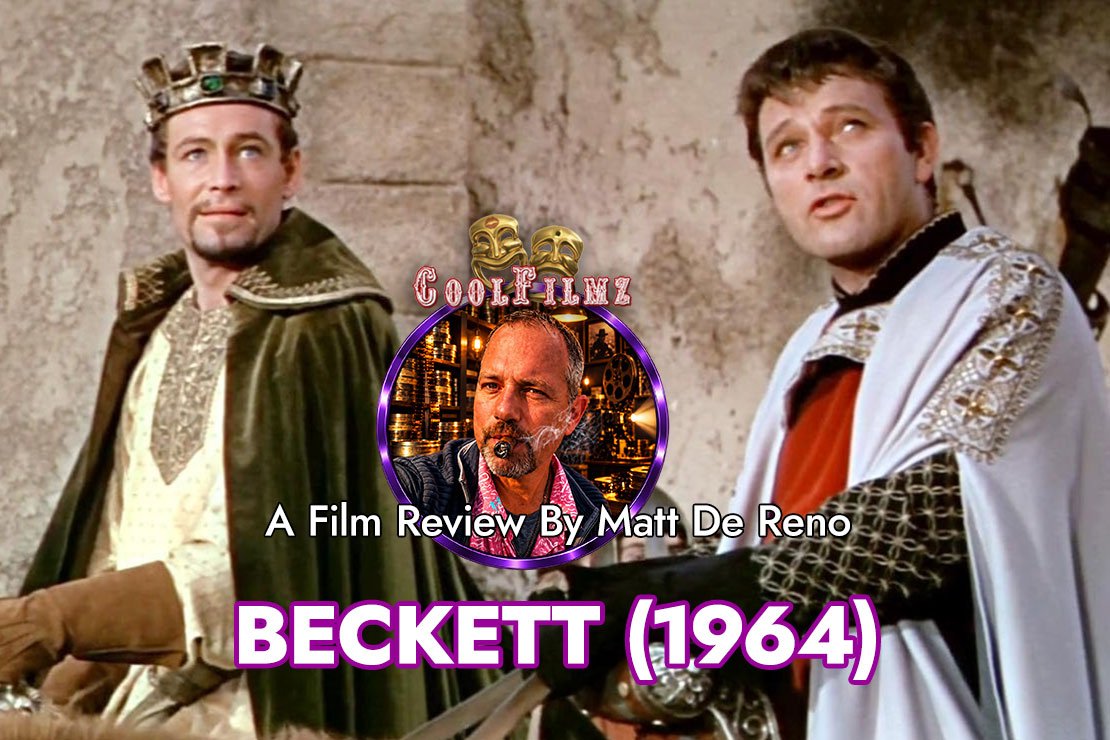
There are movies you remember for their action. Others for their visuals. And then there are movies like Becket, where two great actors essentially lock themselves in a room for two and a half hours and dare you to look away.

Burton plays Thomas Becket. O’Toole plays King Henry II. And what makes the movie so compelling is that before these two men become bitter enemies, they are friends — very close friends. They drink together, chase women together, scheme together and, in their own strange way, seem to genuinely love one another.
That relationship is what makes everything that follows hurt.
O’Toole’s Henry is impulsive, emotional, vain, funny, dangerous and desperately attached to Becket. Burton plays almost the opposite temperature. His Becket is controlled, intelligent and observant, a man who seems to understand Henry better than Henry understands himself.
Put the two together and the chemistry is incredible.
The dialogue is equally good. This is the kind of old movie where words are weapons. Henry and Becket can wound one another without anybody drawing a sword. The conversations have weight, wit and intelligence, and Burton and O’Toole know exactly how to deliver them. Sometimes the most exciting thing happening in Becket is simply watching these two men talk.
Of course, Henry eventually makes what he believes is a brilliant political move: he installs his best friend as Archbishop of Canterbury.
Problem solved.
Except Henry badly misunderstands Becket.
Once Becket accepts the office, something changes in him. What begins almost as another assignment from his king becomes a calling. Becket discovers something larger than his friendship with Henry and certainly larger than Henry’s political ambitions.
His loyalty shifts.
And Henry cannot tolerate it.
That transformation is where the movie becomes much more than a historical costume drama. The conflict isn't merely king versus church. It becomes intensely personal. Henry believes Becket has betrayed him. Becket, meanwhile, comes to believe that remaining loyal to Henry would require him to betray something higher.
Neither man can simply return to what they were. And both of them seem to know it. One of my favorite sequences is the excommunication scene. It remains one of the coolest cinematic demonstrations I can think of for conveying the enormous psychological and spiritual power the medieval Church held over people.
There are no explosions. No armies charging into battle. Instead there is ritual. Darkness. Bells. Candles. Words.And yet the scene feels almost terrifying.
From a modern perspective, it can be difficult to appreciate what excommunication could mean in a world where eternal salvation was not an abstract theological discussion but something people genuinely feared losing. Becket makes you feel that power. The Church doesn't need tanks. It possesses something potentially more frightening to a medieval believer: authority over what happens to your soul.
That scene alone is worth watching. But the heart of Becket remains Burton and O’Toole. I actually came back to this movie recently because of something I'm working through in my own writing.
In my upcoming novel, Bingham’s Notebook: A Midas Files Story, I have been developing the formative years of two important characters: Lawrence “Larry” Bingham and Malcolm Kane.
Readers of The Midas Files already know where Kane eventually ends up. What interests me now is understanding how he got there — and, more importantly, what happens when a relationship built on admiration, mentorship and loyalty eventually fractures.
While thinking about Bingham and Kane, I kept coming back to Henry and Becket.
Their stories aren't the same. In some respects, the arcs I'm writing are almost reversed. Larry Bingham is a mentor figure to the younger Malcolm Kane, and the forces that eventually divide them are very different from those separating an English king and his archbishop.
But the emotional territory is similar.
What happens when someone you love, respect or depend upon becomes someone standing in your way? What happens when two people who once believed they were moving through life together suddenly discover that they serve different masters? And how much worse is betrayal when it comes from the person who once understood you better than anyone else?
That is what I wanted to revisit in Becket. And I am very glad I did.
This is a 1964 film adapted from Jean Anouilh’s play, directed by Peter Glenville, with Burton as Thomas Becket and O’Toole as Henry II. It was enormously acclaimed in its day, earning twelve Academy Award nominations and winning for Edward Anhalt’s adapted screenplay.
More than sixty years later, though, none of that matters nearly as much as what is still sitting there on the screen.
Two extraordinary actors. Great dialogue. A friendship slowly turning into a war. A man discovering a higher calling. And a king realizing that the one person he thought belonged to him never really did.
That is great drama.
If you're looking for an older film to watch, Becket is currently available in the U.S. through Prime Video, including a free-with-ads option as of this writing. Streaming availability changes, of course, but while it's there, I highly recommend taking advantage of it.
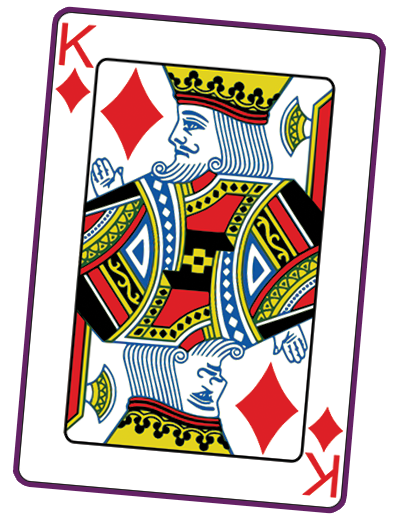
This isn't an Ace for me, but it comes awfully close. For Burton and O’Toole alone — and for one of cinema's great portraits of friendship, loyalty and betrayal — I deal Becket a very solid Cool Filmz King. 👑
About the Author
 Matt De Reno
 has been watching, quoting, debating, and occasionally overthinking movies for most of his life. His favorites include Star Wars, The Godfather, James Bond, and a deep bench of action movies, thrillers, comedies, and cinematic oddities worthy of the CoolFilmz card table. Matt is also the author of The Midas Files, a Pittsburgh-rooted sci-fi thriller book series about hidden history, ancient power, secret technology, and whether humanity can handle the truth. Maybe one day it will become a film — and if it does, may it get dealt an Ace. Reach Matt at