
At its core, Bone Tomahawk is a rescue story.
Kurt Russell plays Sheriff Franklin Hunt, a steady frontier lawman who leads a small posse into dangerous territory after several townspeople are abducted. Among the captives is Samantha O’Dwyer, played by Lili Simmons, whose injured husband Arthur, played by Patrick Wilson, insists on joining the mission despite being in no condition to travel.
The posse includes Hunt, Arthur, the loyal backup deputy Chicory, and the sharp-dressed gunslinger John Brooder. Together, they set out across a harsh frontier landscape in search of the captives, gradually realizing that the threat ahead is far worse than ordinary outlaws.
That is where Bone Tomahawk separates itself from a standard Western. The movie begins in familiar territory, but the deeper the characters ride, the more it shifts into horror.
Kurt Russell Grounds the Movie
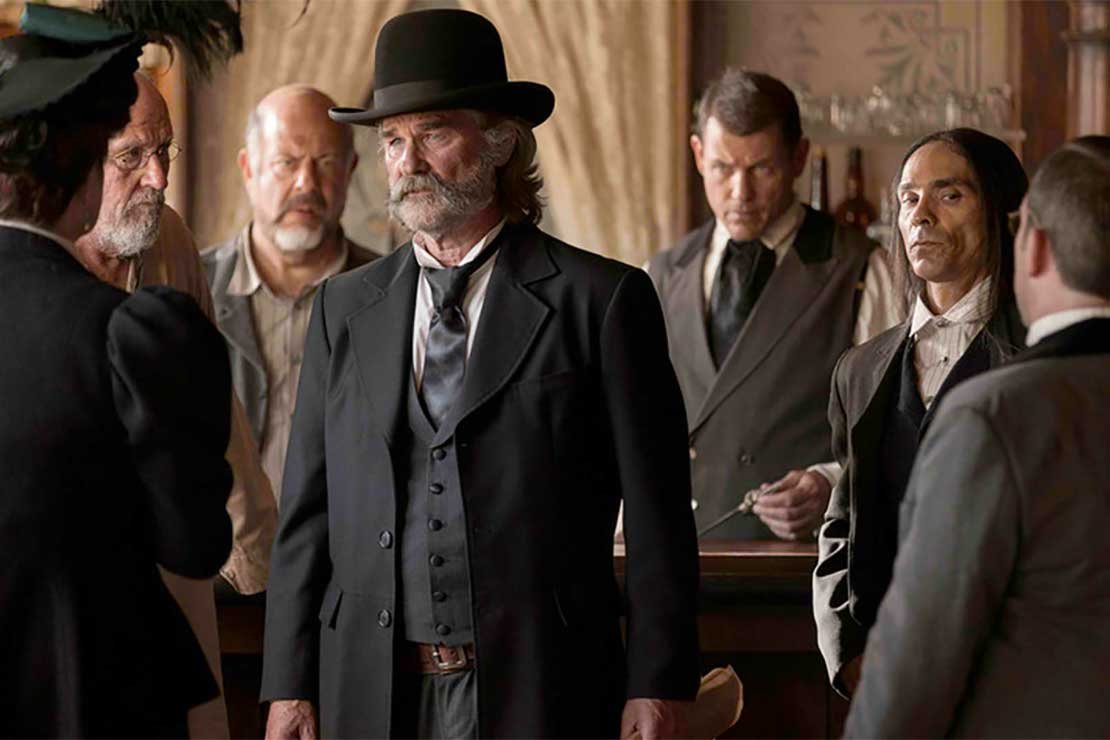
Kurt Russell gives the film the kind of presence it needs.
As Sheriff Hunt, he is calm, capable, and morally centered without feeling too polished. He is not a superhero in a cowboy hat. He is an older man doing a dangerous job because someone has to do it. Russell brings authority to the role, but also a weary humanity that keeps Hunt from becoming a stock Western archetype.
The film works because Hunt feels believable. When the story becomes more horrific, Russell’s grounded performance helps keep the movie from tipping into absurdity.
The Supporting Cast Does Heavy Lifting
Patrick Wilson is excellent as Arthur O’Dwyer, a husband driven by love, pain, and sheer stubbornness. Arthur’s injury makes the journey agonizing, and Wilson plays that physical suffering well. His character could have been a simple “desperate husband” type, but Wilson gives him enough vulnerability and resolve to make his struggle matter.
Richard Jenkins nearly steals the movie as Chicory, Hunt’s older backup deputy. Chicory is talkative, odd, loyal, and unexpectedly moving. He brings humor to the film, but not in a way that undercuts the danger. His rambling observations make him feel human, and that humanity becomes increasingly important as the story grows darker.
Matthew Fox plays John Brooder, a refined but lethal man whose confidence masks a harsher worldview. He adds tension within the group, giving the posse an internal friction that keeps the long journey from feeling static.
The supporting cast helps make Bone Tomahawk more than a horror gimmick. These are not disposable bodies waiting for the violence to start. They are distinct personalities, and the film gives us enough time with them to make the danger count.
A Slow Burn That Earns Its Horror
Zahler’s direction is deliberate. Bone Tomahawk does not rush to the carnage. It spends a long time with the characters as they travel, argue, limp, camp, and move deeper into danger.
For some viewers, that pace may feel slow. But for me, it works. The movie uses that time to build dread. The wide-open frontier becomes isolating. The silence grows threatening. The landscape feels less like freedom and more like a trap.
That patience makes the horror more effective when it finally arrives. The violence does not feel like routine action-movie bloodshed. It feels sudden, ugly, and deeply unpleasant.
Which brings us to the part everyone talks about.
The Violence Is Not for Everyone
Bone Tomahawk is infamous for one especially graphic death scene, and yes, it is as brutal as advertised.
This is not stylized comic-book violence. It is visceral, cruel, and hard to watch. The film wants you to feel the horror of what is happening, and it succeeds almost too well.
For some viewers, that will be the point where the movie loses them. Fair enough. This is not a film for everyone. If graphic violence turns you off, Bone Tomahawk may be too much.
That said, I do think the brutality serves the story. It reveals the true nature of the threat and makes the rescue mission feel genuinely desperate. The violence is shocking, but it is not weightless. It changes how you experience the rest of the film.
Where the Movie Gets Complicated
There is one important caveat: the film’s villains are presented as a cave-dwelling cannibal clan, and the movie uses old frontier-horror imagery that can be uncomfortable because of how Westerns have historically depicted Indigenous people.
The film does make an effort to separate these antagonists from Native communities within the story, framing them more as isolated horror figures than as a real-world tribe. Still, the imagery is loaded, and modern viewers may understandably bring some skepticism to it.
That does not ruin the film for me, but it is worth acknowledging. Bone Tomahawk is effective genre storytelling, but it is also working with material that sits near some old and ugly Western traditions.
Why It Sticks With You
What makes Bone Tomahawk memorable is not only the gore. It is the combination of genres.
The Western gives the movie honor, duty, landscape, and frontier hardship. The horror gives it dread, helplessness, and bodily terror. The character drama gives the violence emotional weight. Those elements work together better than they should.
This is not a slick movie. It feels rough, strange, and sometimes awkward. But that roughness becomes part of its identity. It feels like a campfire story that takes a turn no one was ready for.
Final Thoughts
Bone Tomahawk is gritty, unsettling, and surprisingly well-crafted. It is not a casual watch, and it is definitely not for the squeamish. But if you appreciate slow-burn tension, strong character work, and genre mashups that take real risks, there is a lot to admire here.
Kurt Russell is terrific. Richard Jenkins is a quiet standout. Patrick Wilson gives the story emotional urgency. And Zahler builds a Western horror film that does not fade from memory once the credits roll.
Cool Filmz gives Bone Tomahawk a King.
It may be too brutal for some, but it is undeniably effective.